Essay
Institutions & Civilization
America’s Moral Code
Graeme Wood’s recent Atlantic essay on “Something Is Happening to America’s Moral Code” considers lawbreaking (shoplifting) as resistance against tyranny, but is not really about theft. It is about the weakening of moral seriousness in American life.
The most important thing about the debate he describes is not whether stealing can ever be morally justified. Of course it can. The important thing is that many people now want the moral prestige of resistance without accepting the burden that once made resistance morally meaningful.
That distinction matters.
For most of American history, civil disobedience carried an implicit bargain. Someone who broke a law in the name of justice did so openly and accepted the consequences. Martin Luther King Jr. described this explicitly in his “Letter from Birmingham Jail”: a person who breaks an unjust law “must do so openly, lovingly, and with a willingness to accept the penalty.” The willingness to bear cost was not incidental to the act. It was what transformed lawbreaking from evasion into moral witness.
That older understanding assumed something deeper about morality itself: moral principles are real only if they continue to apply when following them becomes costly.
As we write in Post-Moral America: Why and How We Slide into Moral Decline, this is the assumption that is weakening.
The problem with “shoplifting as resistance” is not simply that theft is illegal. Lawbreaking can be morally serious. The problem is that the rhetoric surrounding it increasingly detaches moral language from moral discipline. The act is framed as politically expressive, emotionally satisfying, or socially symbolic, while the question of obligation recedes into the background. The goal is not sacrifice for principle, but exemption from ordinary constraint as a reward for virtuous intention.
That pattern now appears across American life. Causes people identify with are often granted moral latitude that they would deny to causes they oppose. In both cases, the underlying structure is the same: rules remain binding outwardly but become negotiable inwardly.
This is not ordinary hypocrisy. Hypocrisy still recognizes the authority of the rule. The hypocrite knows he has failed. A post-moral culture begins to lose confidence that the rule should constrain behavior at all once it conflicts with advantage, identity, or political alignment.
That shift is subtle enough that it often feels like moral progress.
Modern Americans are extraordinarily fluent in moral language. Public life is saturated with discussions of harm, dignity, justice, freedom, and oppression. Institutions issue ethical statements constantly. Individuals are highly attuned to symbolic wrongdoing and social offense. Yet the practical willingness to accept cost for shared rules has weakened in many areas of public life.
This produces a strange inversion. Moral language grows more intense while moral constraint grows weaker.
The result is a society in which expressive moral performance increasingly substitutes for obligation. Outrage becomes a form of participation. Public condemnation becomes a signal of identity. Small symbolic disputes absorb enormous emotional energy precisely because they impose little real cost. Arguments about straws, flags, pronouns, logos, plastic bags, or gestures become attractive partly because they allow moral intensity without requiring meaningful sacrifice from powerful institutions or individuals.
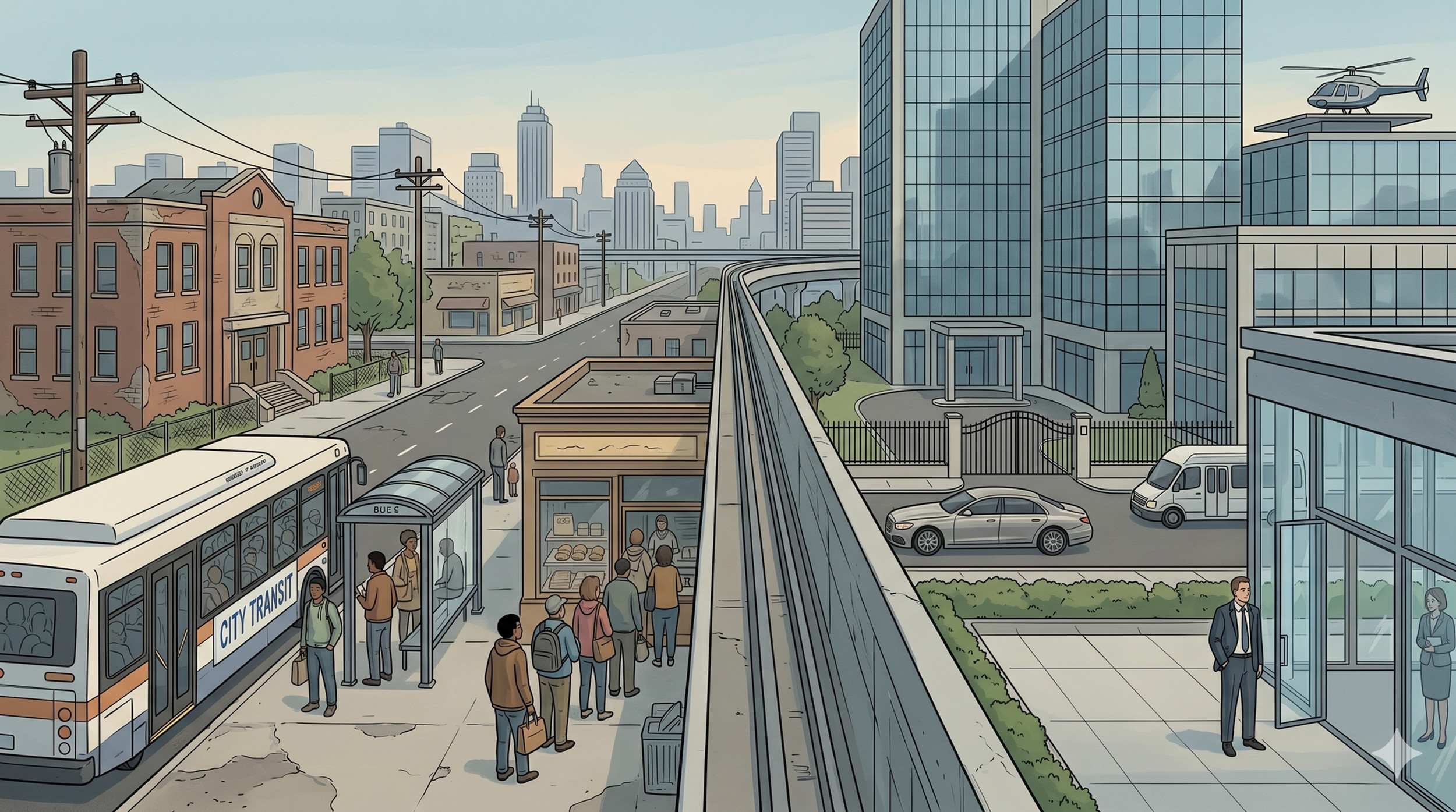
The same pattern appears in debates over wealth and public obligation. Americans still praise public goods in the abstract—schools, infrastructure, scientific research, legal stability—but increasingly tolerate arrangements in which those most capable of supporting such systems can opt out of them. Public transportation deteriorates while private aviation expands. Public schools strain while elite enclaves flourish. Healthcare divides between uneven general provision and insulated private care. The issue is not inequality alone. It is that those who benefit most from the common system increasingly acquire ways to avoid its failures while shifting its burdens onto everyone else.
A durable moral order depends on reciprocity. People accept costs when they believe others are accepting comparable costs and when institutions enforce rules consistently. Once enough people conclude that rules apply mainly to those without leverage, moral language begins to lose authority. It remains culturally useful, but it no longer governs behavior reliably.
This is why the debate Wood describes matters more than it first appears to.
A society does not become post-moral because people stop caring about morality. In many ways, moral concern intensifies. It becomes more visible, more emotionally expressive, and more rhetorically central. What weakens is the expectation that moral principles should constrain one’s own side when doing so becomes costly.
That is the real significance of “shoplifting as resistance.” The issue is not avocados or petty theft. It is the growing desire to claim the emotional and social rewards of moral seriousness while avoiding the discipline that once defined it.
Civil disobedience once carried moral force because it accepted consequence in the name of principle. A politics that seeks the prestige of resistance without the burden of reciprocity is doing something fundamentally different.
And once a society loses the distinction between the two, moral language itself begins to hollow out.