Essay
Morality & Hare
What If the Philosophers Were Wrong?
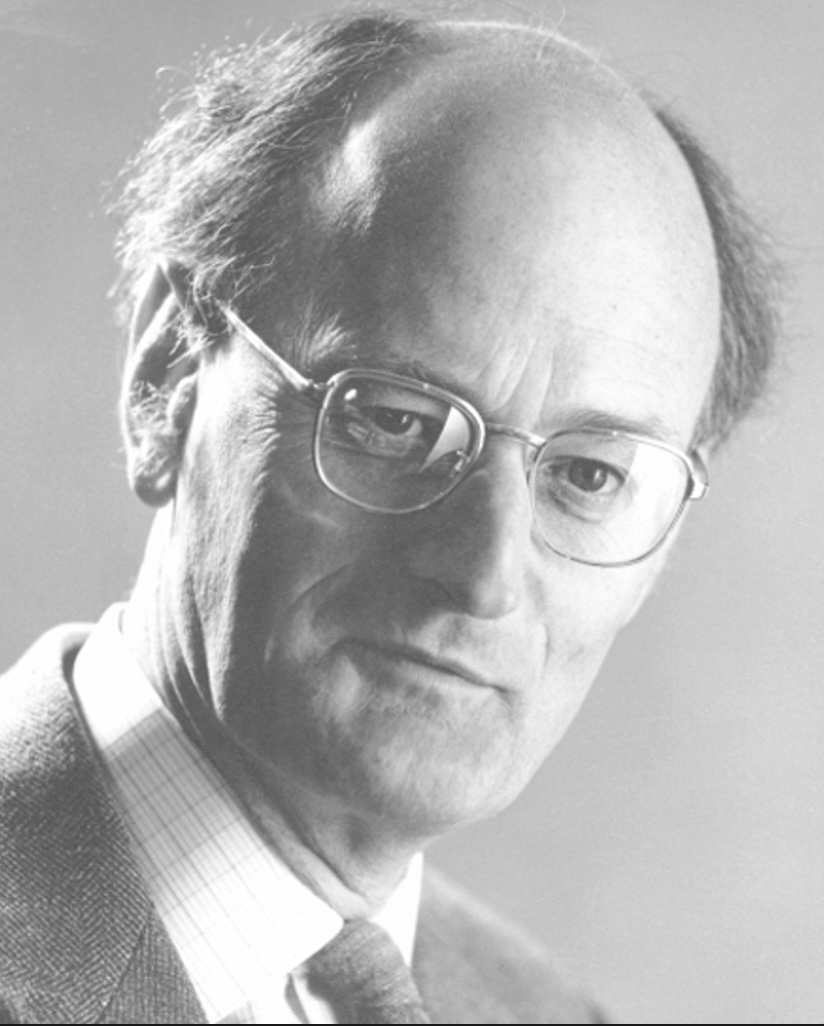
Moral philosophy has an unusual relationship with defeat. An argument can fall out of favor without anyone showing where it fails.
R. M. Hare’s moral philosophy is a striking case. For several decades in the middle of the twentieth century, Hare offered an account of moral reasoning built from an apparently modest starting point: what are we doing when we make a moral judgment? His answer was that moral judgments are prescriptive and universalizable. To say that someone ought to do something is not merely to describe the world or report an attitude. It is to prescribe conduct. And to make that prescription morally is to commit oneself to applying it across cases that are alike in the relevant respects.
This was not a complete moral theory in the ordinary sense. Hare did not begin by announcing a list of moral truths and then defending them. He asked what follows from the logic of moral language itself.
That project was eventually displaced by other approaches to ethics. Philosophers challenged its ambitions, rejected its picture of moral reasoning, attacked its utilitarian implications, and moved toward theories that seemed better able to accommodate character, history, partiality, moral perception, cultural practice, and the unruly texture of actual moral life. Philippa Foot, Bernard Williams, Alasdair MacIntyre, Jonathan Dancy, and others became associated with very different ways of thinking about morality.
But intellectual succession is not refutation. The important question is not whether later philosophers found Hare’s philosophy congenial. It is whether they defeated the argument at its foundation.
That question is harder than the history of the subject makes it appear.
The Logic of “Ought”
Begin with an ordinary moral judgment: I ought not deceive this person.
The judgment is not merely a prediction that I will refrain from deception. It is not a report that my culture disapproves of deception, nor a statement that I happen to dislike it. If I sincerely say that I ought not deceive someone, I am prescribing against the act.
Now change the identities while preserving everything that matters. Someone else is considering the same deception under the same relevant circumstances. If I say that deception is wrong when it is done to me but permissible when I do it to someone else, I need to identify a difference that justifies the change. “Because this time I benefit” will explain my preference. It will not justify the moral distinction.
Universalizability begins with this simple demand. A moral prescription cannot depend on the accidental fact that I am the person making it. If two cases differ, the judgment may differ; morality does not require us to pretend that different situations are identical. But the difference has to do some work.
Role reversal makes the requirement more demanding. It is not enough to imagine myself occupying another person’s physical location while retaining my present interests and preferences. I must represent the position I am prescribing for, including the circumstances, knowledge, interests, and preferences belonging to the person who occupies it. If my rule imposes a burden on someone else, I cannot assess that burden solely from the standpoint of the person who benefits from imposing it.
The question becomes: can I still prescribe the rule when I adequately represent every affected position?
Nothing about that test requires moral intuition, a catalogue of virtues, a social contract, or access to moral facts through some special faculty. It follows from taking seriously the kind of claim being made. A person can refuse the test by withdrawing the moral claim. They can say, “I will do this because I want to and because I have the power.” What they cannot do is keep the authority of ought while exempting their own prescription from the conditions that give ought its moral character.
Any successful rejection of Hare has to explain what is wrong with that reasoning.
Refusal Is Not Refutation
Many objections to Hare begin somewhere else. They tell us that human morality is richer than universal prescription, and of course it is. Moral life includes attachments, loyalties, virtues, traditions, emotions, histories, relationships, institutions, habits, and forms of judgment that cannot plausibly be reconstructed as people consciously performing universalization tests all day.
But Hare never needed ordinary moral life to resemble a philosophy seminar.
He distinguished between intuitive moral thinking and critical moral thinking. Most of the time we live by dispositions, principles, habits, and judgments already formed. We do not recalculate morality from first principles before deciding whether to return a wallet or keep a promise. Nor should we. A person who had to reconstruct the justification for friendship every time a friend needed help would be deficient as a friend.
Critical reasoning becomes necessary when our principles conflict, when an unfamiliar case defeats our ordinary rules, or when we have reason to suspect that the rules themselves are wrong. At that point, saying that morality is ordinarily embodied in character, practice, or inherited forms of life does not answer Hare’s question. It tells us where our moral judgments come from and how we ordinarily use them. It does not tell us how to decide whether they are defensible when they come into conflict.
This distinction matters because several famous alternatives to Hare operate at a different level from the argument they are supposed to replace. A theory can give a profound account of virtue without showing that a moral prescription need not be universalizable. It can show that moral judgment is historically situated without showing that history makes an otherwise indefensible prescription defensible. It can show that particular cases resist codification without showing that relevantly identical cases may receive different prescriptions simply because different people benefit.
Those are substantive insights about moral life. They become refutations of Hare only if they reach the logic of the moral claim.
The Problem of Partiality
Bernard Williams made one of the most powerful objections to moral theories that appear to demand an impersonal view of human life. People do not experience themselves merely as locations at which welfare can be increased or decreased. They have projects, commitments, relationships, and identities that make their lives their own. A morality that required us constantly to abandon those attachments whenever an impersonal calculation demanded it would threaten the integrity of the person doing the choosing.
The force of the objection is easy to feel. If my child and a stranger are both in danger, morality does not obviously require me to flip a coin because their lives possess equal abstract value. The fact that one of them is my child matters to what I may or ought to do.
But universalizability does not require the elimination of that fact. “This person is my child” describes a relationship that can be represented in the prescription. The universal rule may permit parents to give forms of priority to their own children because anyone occupying the parental role may do the same. Role reversal does not erase relationships. It asks whether the prescription governing them can be accepted across the positions affected by it.
The real difficulty begins when partiality is offered not as a relevant fact but as a moral exemption. “I may favor my child in this circumstance because I bear special responsibilities as their parent” is capable of universal formulation. “My interests count more because they are mine” is not made morally defensible by calling the preference a commitment.
Integrity matters. So does friendship, loyalty, love, and the first-person structure of a human life. Hare’s test does not require us to become people without any of them. It requires that when those attachments affect other people, the prescriptions we make remain answerable to the positions on which their costs fall.
The Problem of Character
Philippa Foot helped return virtue and character to the center of moral philosophy. Her work challenged the idea that morality could be understood entirely through a peculiar class of overriding prescriptions detached from the reasons and ends found in human life. The later revival of virtue ethics made the challenge broader: perhaps morality is fundamentally about what kind of person one should be rather than about rules governing isolated choices.
There is much that a theory of moral language will not tell us about character. It will not explain how courage develops, why generosity becomes habitual, what friendship requires over decades, or how a good person learns to perceive features of a situation that another person misses.
But none of those omissions shows that a prescription can escape universalization.
A virtue itself contains standards of conduct and judgment. Courage is not whatever behavior a community happens to praise as courageous; loyalty can become complicity; obedience can become cowardice; generosity can become domination. Once we ask whether a purported virtue is actually good, we have returned to justification. Character may determine which reasons a person notices and how readily they act on them, but the existence of character does not settle whether the prescriptions embedded in it are defensible.
Virtue ethics therefore addresses questions Hare did not answer. That is a reason to need more than Hare, not a reason to conclude that Hare’s account of moral prescription was false.
The Problem of History
MacIntyre’s challenge goes deeper because it questions the aspiration to stand outside moral traditions at all. Our concepts of justice, virtue, obligation, and the good have histories. They acquire meaning within practices and traditions of inquiry. The modern attempt to construct morality from supposedly universal reason can look, from this perspective, like a local historical project that has mistaken itself for reason as such.
The historical point is powerful. No actual moral reasoner arrives without a language, a culture, inherited concepts, and forms of life that make moral thought possible. Even the questions we regard as obvious have histories.
Yet the origin of a concept and the validity of an argument made with it remain different questions. Arithmetic also has a history. So does logic. Showing how a practice developed can explain why certain propositions became available to us without determining whether those propositions are true.
The same problem arises inside traditions themselves. Traditions disagree. Practices conflict. A society may inherit principles whose consequences it can no longer defend. If historical embeddedness means that no judgment can be assessed beyond the standards supplied by its own tradition, then criticism across traditions becomes difficult—but criticism within them becomes difficult as well. The reformer who challenges an established practice can always be answered by pointing to the very tradition being challenged.
Universalizability does not provide a view from nowhere. It does not ask a reasoner to discard their history. It asks whether the prescriptions they make can survive when the positions affected by those prescriptions are adequately represented. The reasoner remains historically situated throughout. What disappears is not history but the privilege of treating one’s own position as morally decisive merely because it is one’s own.
The Problem of Particularity
Jonathan Dancy’s particularism challenges another apparent feature of rule-centered morality: the assumption that a reason must have the same moral force wherever it appears. A fact that counts in favor of an action in one context may count against it in another. Telling someone the truth is usually a reason in favor of speaking, but not necessarily when the truth is being demanded by a murderer searching for their victim. Moral judgment may depend on sensitivity to the whole situation rather than the application of general principles.
If universalizability meant that a single feature must have identical moral force in every context, particularism would be devastating. But that is not what the requirement says. Cases must receive the same prescription when they are alike in all morally relevant respects. Context is therefore already inside the test.
The disagreement concerns how much can be said in advance about which features will matter. Perhaps very little. Moral reality may be too complicated for a manageable code of exceptionless rules. A sensitive reasoner may have to understand a situation in considerable detail before knowing which prescription survives.
That possibility makes moral reasoning harder. It does not make universalizability disappear. However fine-grained the relevant description becomes, the question remains whether the judgment changes because the morally relevant circumstances changed or because the identity of the beneficiary did.
Particularism can therefore be right about the complexity of reasons without showing that moral prescriptions cease to be universalizable.
The Information Problem
There is, however, a serious vulnerability in Hare’s method, and it lies exactly where the method says it does: the quality of the representation.
Role reversal is only as good as the information carried across it. A slaveholder who imagines being a slave but fails to represent the slave’s desire for freedom has not performed the test. A wealthy person considering a rule for the poor may misunderstand what deprivation does to the choices available to them. A healthy person may know the clinical facts about chronic pain while badly misrepresenting what those facts mean from inside the life of the person experiencing it.
This is not a minor practical inconvenience. It is one of the central difficulties of moral reasoning.
Full information is an idealization. Human beings never possess it. We misunderstand one another, project our own preferences, discount experiences unlike ours, and mistake familiar social categories for morally relevant differences. A universal prescription built from bad representations can therefore be confidently wrong.
But this weakness does not point toward intuitionism, conventionalism, or the abandonment of universalization. It points toward better information. The fact that role reversal can fail because I have misunderstood your position is not evidence that your position should be removed from the test. It is evidence that I need to understand it better.
The informational demand also explains why moral inquiry cannot be reduced to formal logic. Logic constrains the relationship among the prescriptions, but facts supply the world to which those prescriptions apply. The more consequential the decision, the less defensible it is to universalize from a caricature of the people who will bear its consequences.
Hare’s method is demanding because morality is demanding. It requires a reasoner to know enough about other positions for their inclusion to be real rather than ceremonial.
The Fanatic
There is another famous difficulty. What if someone accepts the consequences?
Suppose a fanatic endorses a cruel rule and insists that they would prescribe it even if they occupied the victim’s position. Universalizability appears to have nothing left to say. The fanatic is willing to suffer under the rule, so the role reversal produces no contradiction.
The objection matters because universalizability cannot mean that every cruel person will be argued into benevolence. But the fanatic case is also easy to make artificially clean by stripping away the informational requirement. The question is not whether the fanatic, standing comfortably in their present position, can announce a willingness to suffer. They must represent the affected position with its actual preferences and circumstances and prescribe from there.
A genuinely informed fanatic may remain possible. If someone fully represents every affected position and nevertheless embraces the prescription from each of them, the logic of universalization cannot simply manufacture a contrary preference. Hare’s account has reached a limit. That limit is important because it tells us what the theory does not claim: moral reasoning is not a mechanism for forcing every possible psychology to want the same thing.
But the existence of a limit is not a refutation of everything before it. The ordinary moral offender is rarely a philosophical fanatic who has achieved perfect information and cheerfully embraces every burden they impose. Much injustice depends on insulation from the positions of the people who bear it, selective attention to their interests, convenient factual beliefs, or exemptions that become considerably harder to maintain when roles are genuinely reversed.
The fanatic identifies the edge of the method. They do not erase its jurisdiction.
What Would Refuting Hare Require?
This is the question that matters now.
It is not whether twentieth-century philosophers produced richer accounts of virtue, history, integrity, moral perception, emotion, or particular judgment. They did. It is not whether Hare solved every problem in ethics. He did not. It is not even whether every conclusion Hare drew from his own theory should be accepted.
The foundational question is narrower: can a judgment remain a moral prescription while the person making it refuses to apply it across relevantly identical cases, or refuses adequately to represent the positions of the people to whom it is being prescribed?
If the answer is yes, we need an account of what makes the resulting judgment moral rather than a preference backed by authority, habit, identity, or power. If the answer is no, then much of what was treated as the rejection of Hare occurred without dislodging the central argument.
Philosophy often advances by replacing one set of questions with another. That is usually a virtue. No discipline should spend forever litigating the conceptual framework of an earlier generation. But replacement creates a danger of its own: a problem can disappear from the literature because people stop finding it interesting before anyone has solved it.
Hare’s problem has not become antiquated merely because the vocabulary around it has. Every moral dispute still contains the same possibility. Someone is prescribing what may be done to someone else. The prescription rests on some description of the facts. Certain differences are being treated as relevant and others ignored. Some interests are represented more adequately than others. Somewhere in the argument sits the question of whether the person making the prescription could still make it if every affected position were theirs to occupy.
Perhaps there is a decisive answer to Hare. If so, it should be possible to state where the logic fails.
Until then, the uncomfortable possibility remains that moral philosophy did something less dramatic than refute him. It moved on.